
Losing a tooth is not just about appearance. It can affect the way you chew, speak, and even how surrounding teeth function. When a gap is left untreated, neighbouring teeth may begin to shift, and opposing teeth can over erupt. Over time, this can influence bite balance and oral stability.
When considering tooth replacement options, two commonly discussed solutions are a fixed dental bridge and a dental implant procedure. Both are established restorative dentistry approaches, but they work in different ways. Understanding the difference helps you make an informed decision that suits your oral health needs.
What Is A Dental Bridge And How Does It Work?
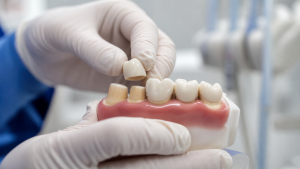
A fixed dental bridge replaces a missing tooth by anchoring a prosthetic tooth to adjacent teeth. The neighbouring teeth are prepared and shaped so that crowns can support the artificial tooth positioned in between.
Key characteristics of a dental bridge include:
- Support structure comes from adjacent teeth.
- Typically does not require a surgical procedure.
- May be completed in a shorter treatment time compared to some implant cases.
- Involves preparation of neighbouring teeth.
Because the bridge relies on surrounding teeth for support, the condition of those teeth is important. If they are heavily restored or structurally compromised, this may influence suitability assessment consultation.
What Is A Dental Implant And How Is It Different?
A dental implant procedure involves placing a titanium fixture into the jawbone. This fixture acts as a replacement root. After a healing period, an implant supported crown is attached.
Implants differ from bridges in several ways:
- Support structure is the jawbone rather than adjacent teeth.
- Surgical placement is required.
- The adjacent teeth do not need to be prepared.
- Adequate bone support is necessary.
Because implants rely on bone integration, overall health, bone quality, and healing capacity are important factors.
How Do Bridges And Implants Compare Side By Side?
When comparing dental implant vs bridge comparison factors, it is helpful to look at practical differences.
| Feature | Dental Bridge | Dental Implant |
|---|---|---|
| Support structure | Adjacent teeth | Jawbone |
| Surgical procedure | Not typically required | Required |
| Treatment time | Often shorter | May require staged process |
| Bone preservation | Does not stimulate bone | May assist in maintaining bone |
| Suitability factors | Condition of neighbouring teeth | Bone quality, general health |
This table provides a broad overview. Individual cases vary depending on oral health status and treatment planning.
Does One Option Preserve Bone Better Than The Other?
Bone preservation is a key consideration. When a tooth is removed, the underlying bone can gradually reduce over time due to lack of stimulation. An implant supported crown may assist in maintaining bone in that area because it transmits functional forces to the jawbone.
A tooth supported bridge does not directly stimulate the bone in the missing tooth area. However, bridges remain a well established option in restorative dentistry comparison discussions, particularly when adjacent teeth already require crowns.
Is The Treatment Process Very Different?
Yes, the treatment process differs.
With a dental bridge, preparation of neighbouring teeth and impressions are typically completed before the bridge is fabricated and cemented.
With a dental implant procedure, the process generally involves:
- Surgical placement of the titanium fixture.
- A healing period to allow integration with bone.
- Placement of the final implant supported crown.
Healing time varies between individuals. Factors such as bone density, smoking, and overall health can influence recovery.
What Are The Suitability Considerations For Each Option?
Suitability assessment consultation is essential before deciding.
Factors influencing choice may include:
- Condition of adjacent teeth.
- Amount and quality of available bone.
- Overall medical history.
- Personal preference regarding surgical procedures.
- Long term maintenance commitment.
There is no universal solution. A restorative dentistry comparison must be tailored to each patient.
How Does Long Term Maintenance Differ?
Both bridges and implants require ongoing care.
For bridges:
- Flossing under the pontic is important to prevent plaque accumulation.
- Adjacent supporting teeth must be monitored.
For implants:
- Good oral hygiene is essential to protect surrounding gum tissue.
- Regular reviews help monitor implant stability and gum health.
Routine dental examinations support early detection of any concerns.
National oral health guidance in Australia consistently emphasises the importance of plaque control and regular dental care in maintaining both natural teeth and prosthetic restorations.
When Should You Consider Professional Advice?
If you have a missing tooth and are unsure about replacing it, a professional consultation helps clarify options. Leaving a gap untreated may affect neighbouring teeth and bite alignment.
Whether exploring a fixed dental bridge or a dental implant procedure, thorough assessment ensures suitability is evaluated safely and responsibly.
Where Can You Receive Personalised Tooth Replacement Guidance?
Choosing between dental bridges vs implants is a significant decision. At My Dentist, treatment planning focuses on careful evaluation of bone support, adjacent tooth health, and long term oral stability. From explaining the differences between surgical and non surgical options to outlining maintenance requirements and healing expectations, every discussion is detailed and transparent. Each tooth replacement option is presented clearly so you can make an informed decision that aligns with your oral health needs and personal preferences.
Important FAQ’s
Q1. Is a dental implant stronger than a bridge?
Both options are designed to restore function. Suitability and long term outcomes vary between individuals.
Q2. Does a bridge require surgery?
A traditional fixed dental bridge does not usually require surgical placement.
Q3. How long does implant healing take?
Healing time varies depending on bone quality and overall health.
Q4. Can anyone have a dental implant?
Adequate bone support and medical suitability are required. Assessment is necessary.
Q5. Do bridges affect neighbouring teeth?
Yes, adjacent teeth are prepared to support the bridge.
Q6. How do I decide which option is right for me?
A suitability assessment consultation with your dentist will help determine the most appropriate option.
References
- Australian Dental Association
https://www.ada.org.au - Healthdirect Australia, Dental Implants Overview
https://www.healthdirect.gov.au/dental-implants - Healthdirect Australia, Dental Bridges Overview
https://www.healthdirect.gov.au/dental-bridges
Disclaimer
All dental procedures involve potential risks and benefits. The information provided in this blog is general in nature and should not be taken as medical advice. We recommend that you seek guidance from a suitably qualified health professional before making decisions about your oral health. Where appropriate, you may also wish to consider obtaining a second opinion.
Any images or videos featured are shared with the informed consent of our patients and are intended for educational purposes only. They are not a guarantee of results, as every patient is unique. Treatment outcomes — including recovery, potential complications, and effectiveness — can vary from person to person.