
You brush twice a day, floss regularly, and haven’t felt a hint of pain—so your teeth must be fine, right? Not necessarily. One of the most overlooked dental issues is a cracked tooth that shows no symptoms at all. These “silent fractures” can quietly progress under the radar until the damage becomes severe. Left undetected, a hairline crack in a tooth can evolve into a much bigger problem, even leading to tooth loss.
So how do dentists uncover what you can’t see or feel? This blog breaks it down with practical examples, expert techniques, and everything you need to know about asymptomatic tooth cracks.
What Are the Signs of a Cracked Tooth Without Symptoms?
Many cracks don’t cause immediate pain. Some people go months—or even years—without realising a tooth is compromised. When signs do appear, they’re often subtle and easily dismissed.
Possible signs of a hidden cracked tooth may include:
- Brief, sharp pain when biting down
- Sensitivity to hot or cold that lingers
- A vague feeling of pressure on a specific tooth
- Gum inflammation near a single tooth
- Intermittent pain with no clear cause
- Occasional discomfort when releasing the bite
You might not experience these signs every day. That’s part of what makes silent fractures tricky—they can come and go, and often mimic other dental issues.
Can a Tooth Really Crack Without Pain?
Yes. Not all cracks expose the sensitive inner parts of the tooth (the dentine or pulp). When only the enamel is affected, or the crack is microscopic, it may not trigger pain. These are often referred to as hairline fractures or asymptomatic cracked teeth.
In other cases, pain might not develop until the crack deepens, bacteria invade the pulp, or the tooth starts to move slightly when pressure is applied. By the time pain becomes a daily problem, significant damage may already be done.
What Causes Cracks That Go Unnoticed?
Several risk factors contribute to tooth cracks that fly under the radar. Some of the most common include:
- Clenching or grinding teeth (bruxism)
- Chewing on hard items like ice or pens
- Large fillings that weaken the tooth structure
- Age-related enamel wear
- Accidental trauma (e.g. sports injuries)
- Root canal-treated teeth, which are more brittle
In many cases, it’s not a single event but repeated stress over time that leads to cracking.
How Do Dentists Diagnose a Crack You Can’t See?
Dentists use a range of tools and diagnostic techniques to uncover hidden cracks—especially when symptoms are vague or completely absent. These methods are essential for revealing invisible dental cracks and confirming whether you’re dealing with a cracked tooth syndrome.
What Tools Do Dentists Use to Find Hidden Cracks?
| Technique | Purpose | When It’s Used |
| Transillumination | Uses a fibre optic light to highlight cracks | When surface cracks are suspected |
| Bite Test | Detects pain when biting with pressure tools | For intermittent chewing pain |
| CBCT Scan | 3D imaging for root or deep structure cracks | For complex or hidden vertical cracks |
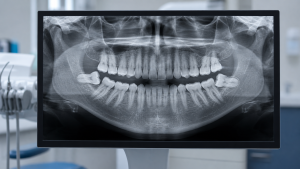
| X-rays (Bitewing/PA) | Identifies bone loss or large structural gaps | Initial diagnostic tool |
| Dye Staining | Reveals small fracture lines with disclosing agents | Used chairside to trace fissures |
| Periodontal Probing | Checks bone and gum levels | Used for suspected root fractures |
These techniques can detect even the smallest fracture lines in enamel or cracks beneath the gum line.
How Do Hidden Cracks Differ from Visible Ones?
Here’s a quick overview to compare the two types:
| Feature | Visible Cracks | Hidden Cracks |
| Pain | Often noticeable | May be completely absent |
| Location | Enamel surface | Beneath enamel or gumline |
| Detection | Seen in a routine check-up | Requires advanced diagnostics |
| Risk | Moderate | High if untreated |
| Progression | Slower with treatment | Can quickly worsen |
What Happens If a Cracked Tooth Isn’t Treated?
Even if a crack starts off without symptoms, it rarely stays that way. Over time, untreated cracks can:
- Allow bacteria to enter and infect the pulp
- Lead to inflammation or abscess formation
- Cause structural weakening and breakage
- Necessitate complex procedures like root canal or extraction
That’s why early detection is so important—even for seemingly “healthy” teeth.
Who’s Most at Risk of Developing a Silent Tooth Crack?
While anyone can experience a hidden crack, certain people are more vulnerable:
- People over 40, due to natural enamel wear
- Individuals with large, older fillings
- Regular teeth grinders or jaw clenchers
- Patients with a history of dental trauma
- Those who frequently chew on hard objects
Recognising these risk factors allows both patients and dentists to be more proactive with monitoring.
Why Should You Be Proactive About Diagnosing the Hidden Damage?
Because cracks don’t heal, they only get worse. Once a fracture reaches the inner tooth structures, your options become more limited. Early diagnosis can mean the difference between a simple restoration and losing the tooth entirely.
How Can My Dentist Help Detect and Treat Hidden Cracks?
If you’ve had unexplained sensitivity, biting discomfort, or just want peace of mind—your next dental check-up is more important than ever. At My Dentist, we take diagnosis seriously. Our modern practice combines experience with cutting-edge tools like transillumination, bite testing, and advanced digital imaging to find cracks before they escalate.
Whether you’re feeling symptoms or not, we don’t wait for pain to strike. We take the time to assess your entire oral health picture—looking beyond the surface to keep your teeth healthy for the long haul. Our team is here to guide you with clarity, compassion, and expert care that puts your smile first.
Important FAQs
Q1: Can a tooth crack and not show up on an X-ray?
Yes. Hairline cracks or those limited to enamel may not appear on traditional X-rays. That’s why Emergency dentists use other methods like transillumination and CBCT.
Q2: Will a cracked tooth always become painful?
Not necessarily. Some cracks remain asymptomatic for months or years. However, most eventually progress and cause symptoms.
Q3: What should I do if I suspect a cracked tooth but have no pain?
Visit your dentist for a detailed evaluation. They’ll perform a series of diagnostic tests even if you have no visible signs or discomfort.
Q4: Can a cracked tooth heal on its own?
No. Unlike bones, teeth cannot regenerate. Cracks must be managed by a dental professional to prevent complications.
Q5: Is every cracked tooth a dental emergency?
Not all, but any crack poses a risk. Even painless ones can suddenly worsen. It’s best to have them assessed early.
Q6: Can I prevent cracked teeth in the future?
Yes. Wearing a night guard if you grind your teeth, avoiding hard foods, and maintaining regular dental check-ups can help minimise risk.